Body Mass Index (BMI): The Ultimate Guide to Understanding Your Score
Body Mass Index (BMI) is a simple yet widely used mathematical formula used to determine if your body weight is healthy in relation to your height. Developed in the 19th century by Adolphe Quetelet, it remains the primary screening tool used by healthcare providers worldwide to categorize weight status.
How to Calculate BMI: The Mathematical Formula
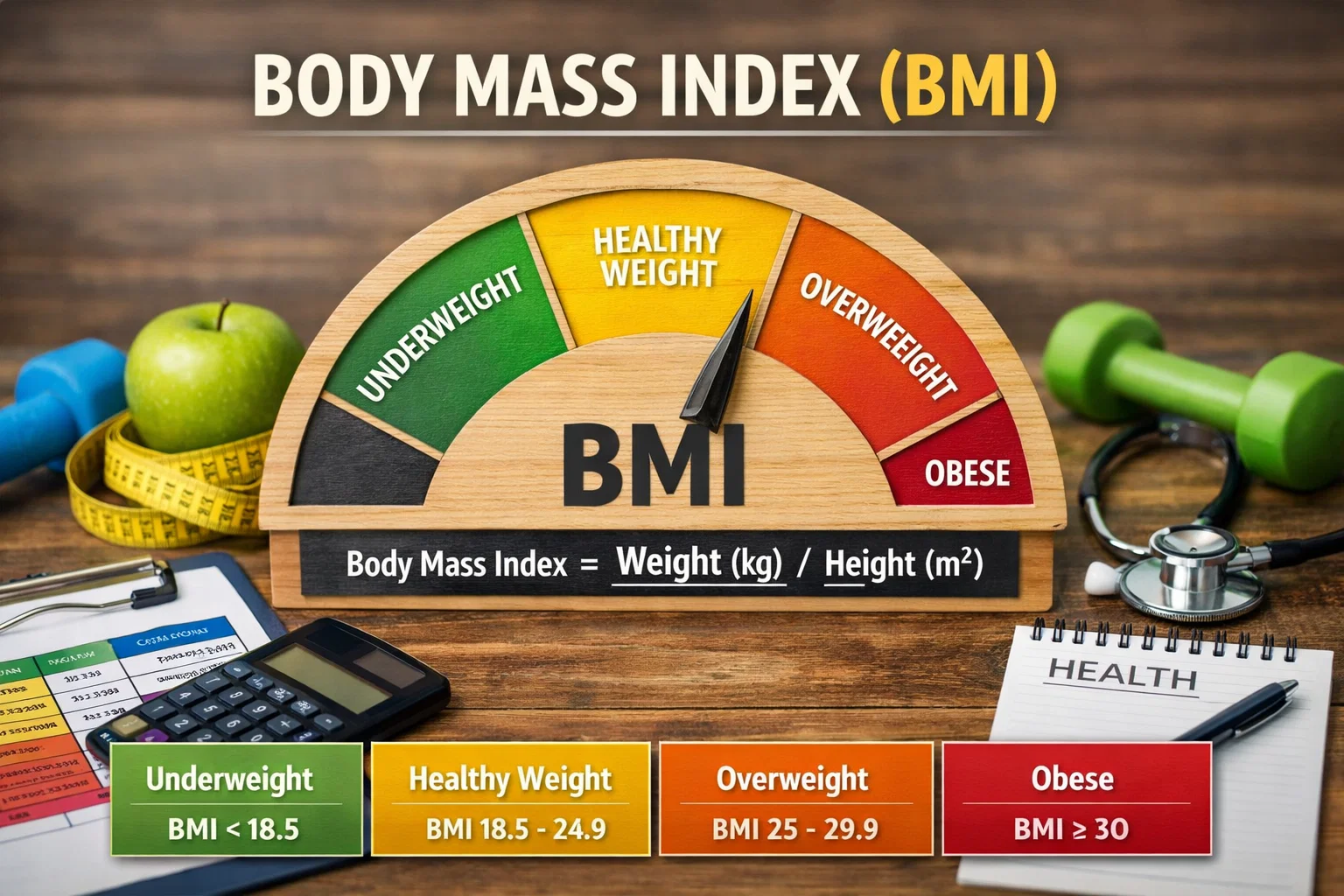
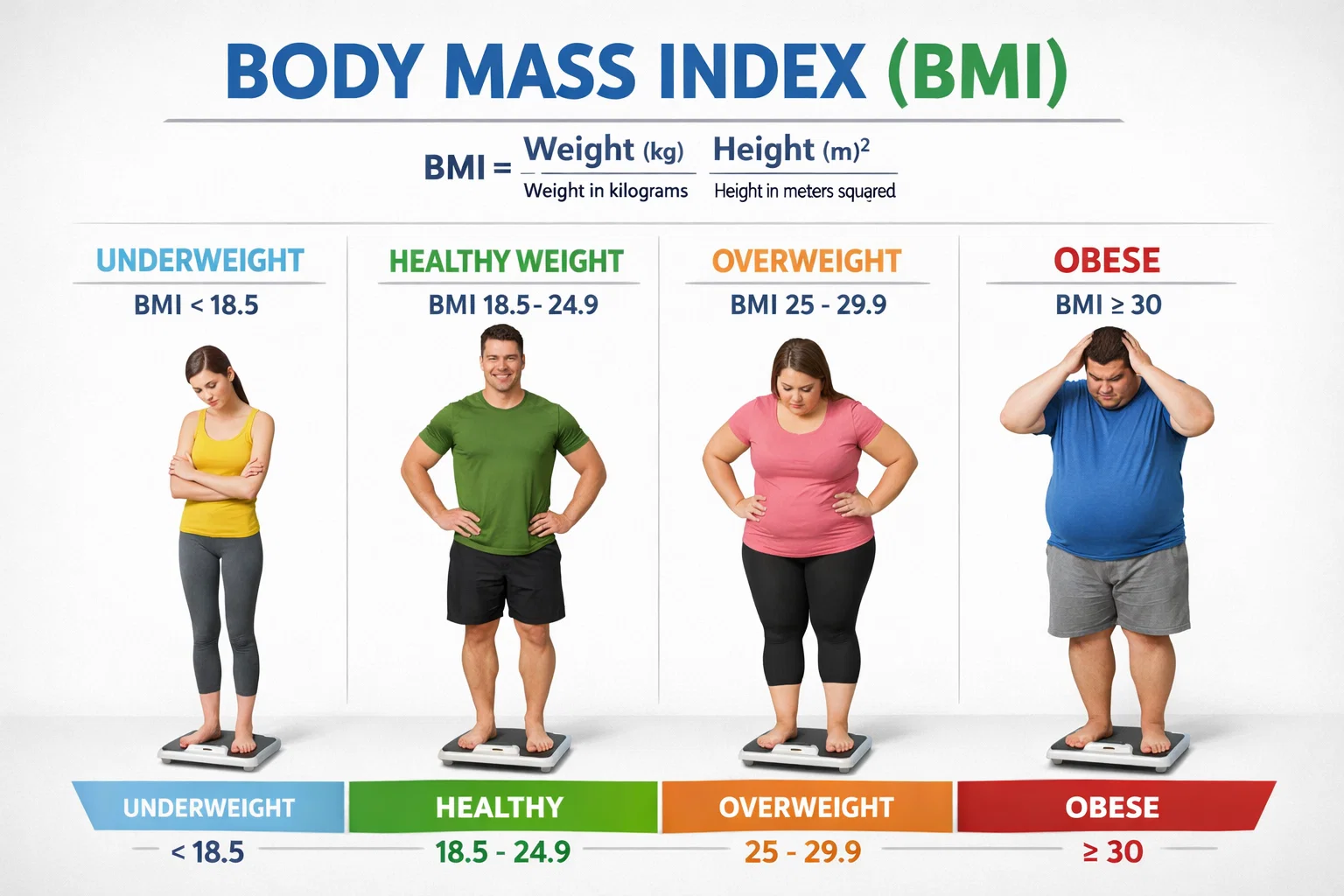
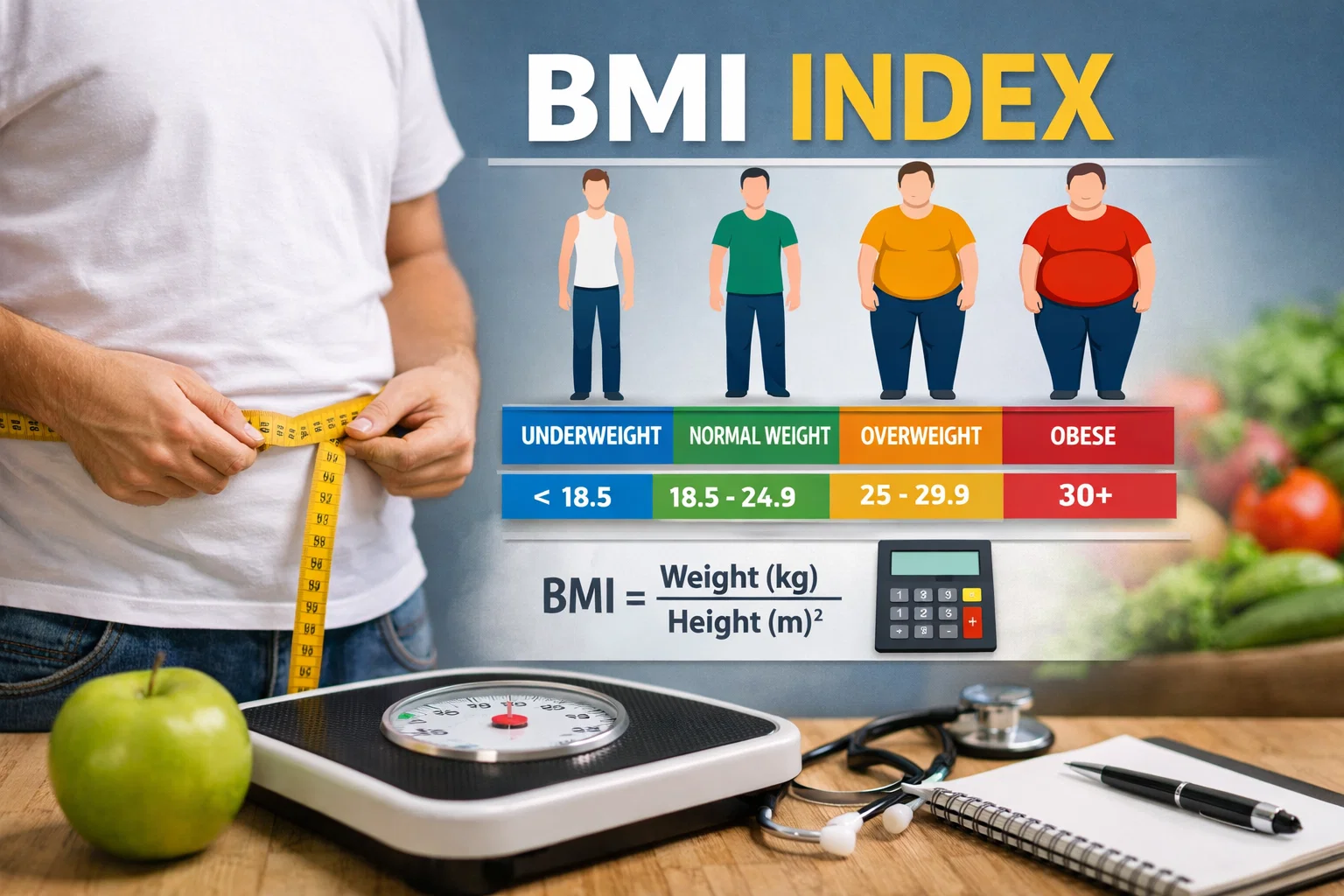
Calculating your BMI is straightforward. In the metric system, you divide your weight (in kilograms) by the square of your height (in meters).
WHO Classification for Adults:
| BMI Range | Weight Category |
|---|---|
| Below 18.5 | Underweight |
| 18.5 – 24.9 | Healthy Weight |
| 25.0 – 29.9 | Overweight |
| 30.0 and Above | Obese |
Is BMI Accurate? Common Pitfalls to Consider
While BMI is a useful general tool, it has several limitations that users frequently ask about:
- Muscle vs. Fat: BMI does not distinguish between muscle mass and body fat. Because muscle is denser than fat, highly athletic individuals or bodybuilders may be classified as „obese” despite having very low body fat.
- Fat Distribution: It doesn’t track where fat is stored. Visceral fat (around the abdomen) is significantly more dangerous to health than subcutaneous fat (on hips and thighs).
- Age and Bone Density: Older adults may have lower bone density or muscle mass, making a „normal” BMI score potentially misleading regarding their overall frailty or health risks.
Frequently Asked Questions (FAQ)
Q: Is BMI suitable for children and teens?
A: For children, BMI is calculated the same way but interpreted using growth charts and percentiles, as body fat levels change significantly as kids grow.
Q: What other metrics should I track alongside BMI?
A: Experts recommend using BMI in conjunction with Waist Circumference or the Waist-to-Hip Ratio (WHR) to better evaluate metabolic risk.
Q: How can I lower my BMI safely?
A: The most effective approach is a combination of a sustainable calorie deficit (nutrition) and regular physical activity. Focus on fat loss rather than just „weight” loss to maintain muscle.
Medical Disclaimer: BMI is a screening tool, not a diagnostic one. A full health assessment should be conducted by a healthcare professional considering body composition and clinical tests.