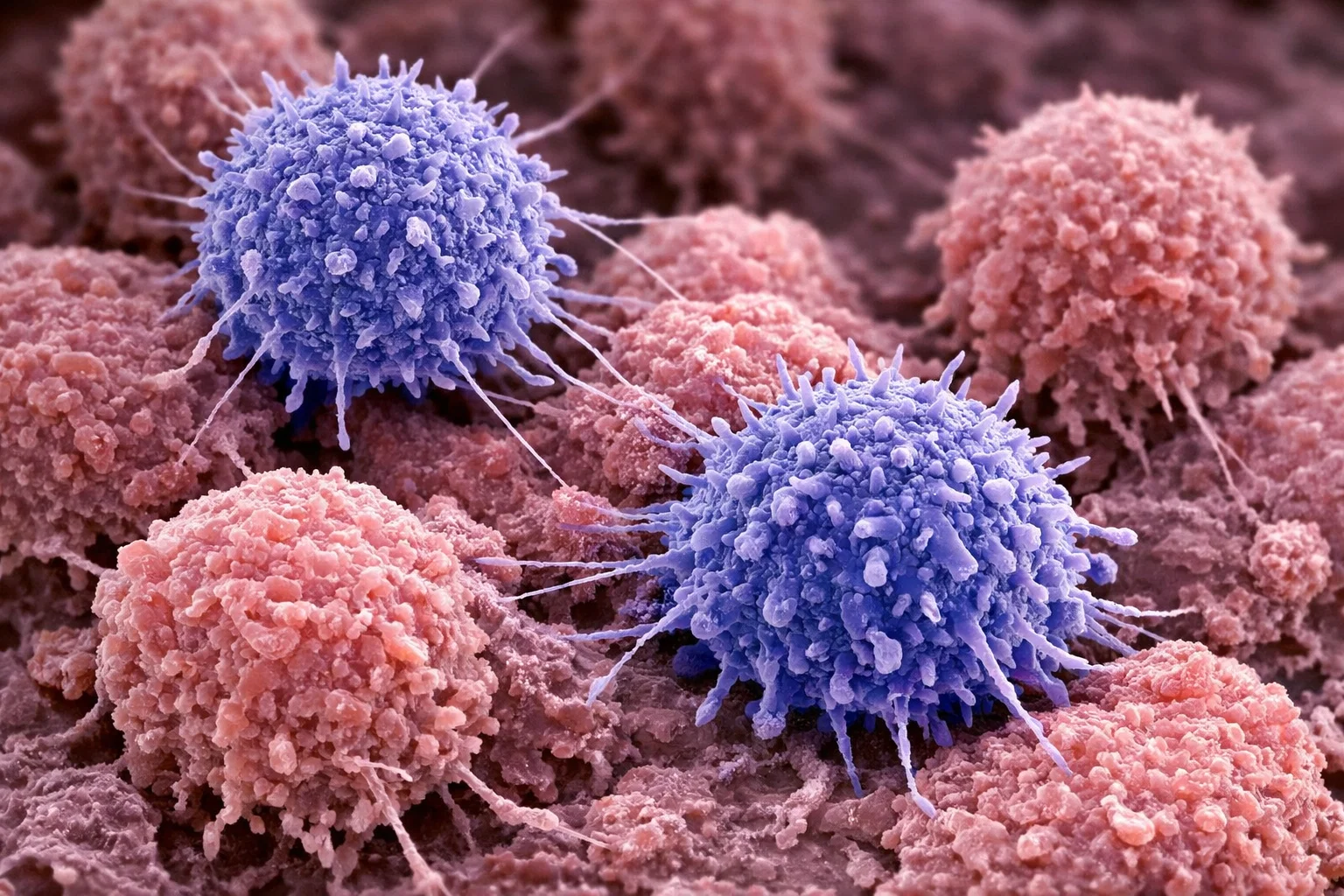
Understanding Natural Killer (NK) Cells: Your Body’s First Line of Defense
Disclaimer: The views and opinions expressed in this article are those of the author and are intended for informational purposes only. This content is not a substitute for professional medical advice. Always consult with a healthcare provider regarding immune system concerns.
What are Natural Killer Cells?
Natural Killer cells (NK cells) are a type of white blood cell, specifically a cytotoxic lymphocyte, that belongs to the innate immune system. Unlike other immune cells (like T-cells) that need to be „trained” to recognize a specific enemy, NK cells are „natural” killers because they can identify and destroy a threat without prior exposure.
Are Natural Killer Cells a Real Thing?
Yes, absolutely. They were discovered in the 1970s. They are a distinct lineage of cells, separate from B-cells and T-cells, and they make up about 5% to 20% of the lymphocytes in human circulating blood.
Do Humans Have Natural Killer Cells?
Yes, every healthy human has NK cells. They are vital for survival. Without them, the body would be highly susceptible to early-stage viral infections and the rapid spread of cancerous tumors.
Function: How Do They Work?
NK cells serve two primary functions: Surveillance and Elimination.
The „Missing Self” Theory: Most healthy cells express a protein called MHC Class I on their surface. This protein acts like an „ID card.” If a cell is infected by a virus or becomes cancerous, it often stops producing this protein. NK cells detect this „missing self” and immediately attack.
Cytotoxic Attack: Once an NK cell identifies a target, it releases granules containing:
- Perforin: A protein that punches holes in the target cell’s membrane.
- Granzymes: Enzymes that enter through those holes and trigger apoptosis (programmed cell death).
Cytokine Production: They also release signaling proteins like Interferon-gamma (IFN-γ) to alert other parts of the immune system that an intruder is present.
Location: Where are NK Cells Found?
NK cells are nomadic and patrol the entire body. Their primary locations include:
- The Bloodstream: Where they circulate looking for abnormal cells.
- The Spleen: A major reservoir for immune cell activity.
- The Liver: NK cells in the liver are unique and play a role in filtering pathogens from the gut.
- The Bone Marrow: Where they are born and mature.
- Lymph Nodes: Where they interact with other immune cells.
- The Uterus: Specific „uNK” cells play a crucial role during the early stages of pregnancy.
What Does it Mean if Your NK Cells are High?
A high NK cell count (or high NK activity) can be interpreted in several ways depending on the clinical context:
- Active Infection: Your body is currently fighting off a viral infection (like the flu or EBV).
- Autoimmune Conditions: In some cases, overactive NK cells can mistakenly attack healthy tissues.
- Chronic Stress: Intense physical or emotional stress can temporarily spike NK activity.
- Pregnancy Concerns: In reproductive immunology, very high NK activity in the uterus is sometimes linked to implantation challenges, though this remains a subject of debate.
Conversely, low NK cell counts are often associated with immunodeficiency or an increased risk of cancer progression.
Examples of NK Cell Activity
- Cancer Surveillance: An NK cell identifies a mutated lung cell and destroys it before it can form a tumor mass.
- Viral Response: During a Herpes Simplex outbreak, NK cells are the first to arrive to kill cells where the virus is replicating.
Frequently Asked Questions
Yes. Research suggests that forest bathing (nature walks), adequate sleep, moderate exercise, and reducing chronic stress can all improve NK cell activity.
NK cells are part of the innate immune system (ready to fight immediately). T-cells are part of the adaptive immune system (they need time to recognize specific pathogens).