🦷 Top 10 Foods That Naturally Stain Your Teeth
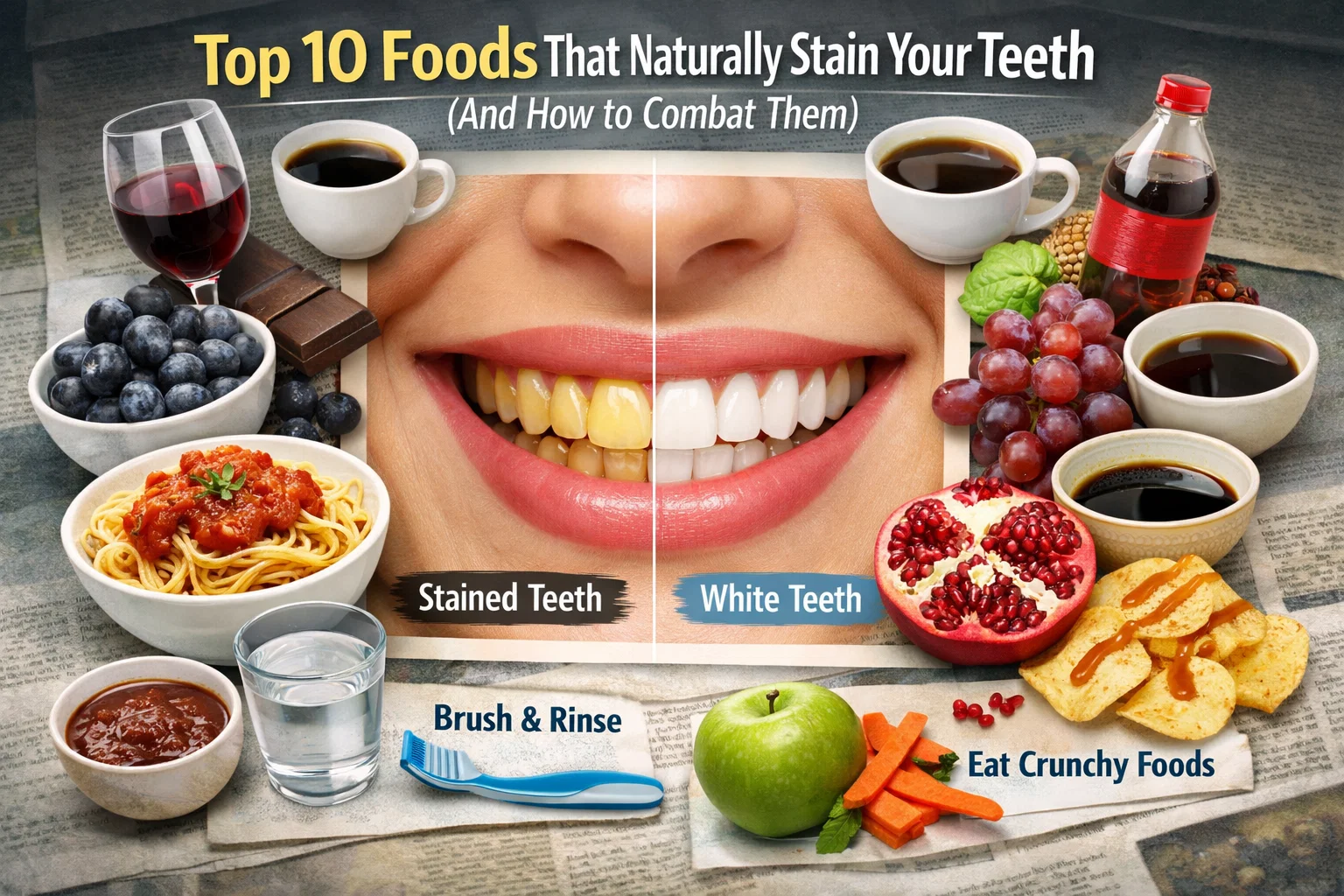
Even the most effective home whitening remedies can be undermined by a few common items in your pantry. Teeth staining occurs when chromogens (pigmented molecules), tannins, and acids work together to penetrate your enamel. Understanding these culprits is essential for anyone looking to maintain a long-lasting, radiant smile.
🔬 The Science: Chromogens & Tannins
Not all foods are created equal when it comes to dental aesthetics. Most stains are caused by three factors:
- Chromogens: Compounds with intense pigments that cling to dental enamel.
- Tannins: Plant-based compounds (found in tea and wine) that enhance the ability of chromogens to stick to your teeth.
- Acids: These soften the enamel, making it more porous and easier for pigments to settle deep within the tooth structure.
🚫 The 10 Most Common Staining Agents
🛡️ Proactive Protection Strategies
You don’t have to give up your morning latte. Follow these expert tips to minimize damage:
- 🥤 The Straw Trick: Drink iced coffee or juices through a straw to bypass your front teeth.
- 🧀 Cheese Before Wine: Eating hard cheese creates a protective protein film on your teeth.
- 💧 Water Rinse: Swish water in your mouth immediately after consuming staining foods.
- 🥦 Fibrous Foods: Eat apples or broccoli; their texture acts as a natural scrubber.
❓ Staining & Prevention FAQ
Is white wine safe?
While not dark, white wine is highly acidic and makes your teeth more susceptible to stains from other foods.
How soon after coffee should I brush?
Wait at least 30 minutes. Brushing immediately after acidic coffee can damage your softened enamel.
Does adding milk to coffee help?
Yes. Casein in milk can bind to tannins, reducing their ability to stick to your teeth.
Disclaimer: The insights shared in this article are the personal opinion of the author and are intended for general information. For personalized dental advice, please visit your local clinic.