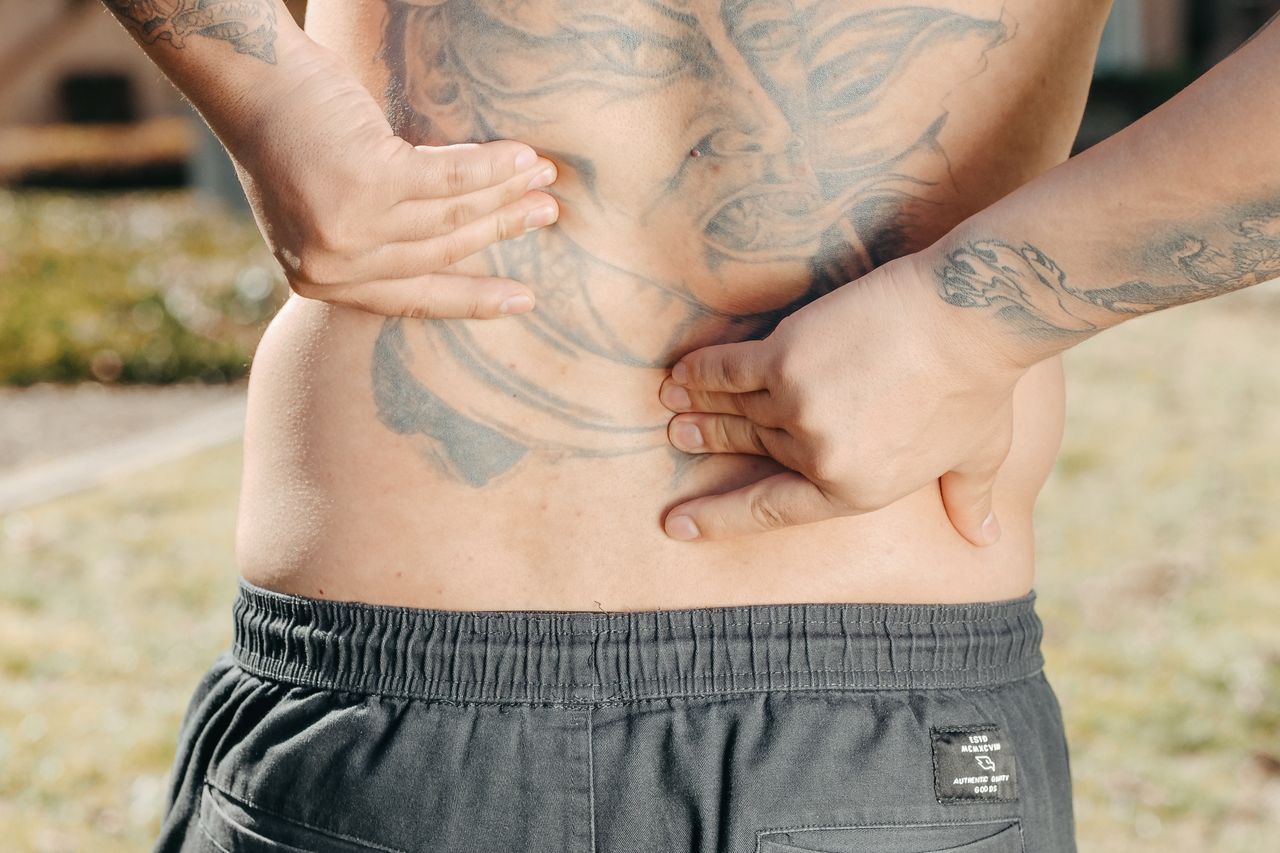
Lower back pain when you stand up from sitting usually happens because prolonged sitting compresses the discs and shortens the hip flexors, so your lumbar muscles are stiff and under-stretched the moment you ask them to bear weight again. In most cases this is a harmless postural or muscular issue that eases within seconds to minutes. It’s worth seeing a doctor if the pain is sharp, radiates down a leg, or comes with numbness, weakness, or bladder changes.
What’s happening in your spine, and why it hurts
Sitting for long stretches changes the shape and mechanics of your lower spine in ways that make the sit-to-stand transition uncomfortable. Here’s what’s behind the most common complaints.
Why does my lower back hurt when I stand up from a chair?
While seated, the pelvis tilts backward and the lumbar spine flattens, increasing pressure inside the intervertebral discs by roughly 40% compared to standing. The hip flexors shorten and the core stabilizer muscles switch off. When you stand, these stiffened structures suddenly have to lengthen and support your full body weight, which can trigger a pulling or aching sensation.
What causes back pain after prolonged sitting?
Beyond disc pressure, sitting reduces blood flow to the lumbar muscles and allows the tiny facet joints along the spine to stiffen from lack of movement. Combined, these factors create a temporary mechanical „lockup” that resolves once you move.
Sharp lower back pain when standing up suddenly – what’s going on?
A sudden, sharp pain (rather than a dull ache) often points to a facet joint catching, a muscle spasm, or irritation of the sciatic nerve as it passes near the piriformis muscle. This is sometimes called postural syndrome when no structural damage is present.
Lower back stiffness when standing up from sitting too long – is it normal?
Yes, mild stiffness that fades within a minute of walking around is a normal sign of deconditioned muscles and reduced circulation, not tissue damage. Stiffness that persists for hours, or that returns every single time you stand, deserves more attention.
Prolonged sitting compresses the lumbar spine’s discs and shortens the hip flexors.
Standing up suddenly loads stiffened lumbar muscles and facet joints that haven’t warmed up.
Irritation of a nerve (such as the sciatic nerve) or joint sends a pain signal to the brain.
Pain eases as muscles re-lengthen, circulation improves, and the lumbar spine regains its curve.
Is it serious? Muscle strain versus nerve or joint problems
Most sit-to-stand back pain is mechanical and short-lived, but a small share of cases reflect something that needs medical evaluation, such as a herniated disc, sciatica, or facet joint arthritis.
- Pain is dull, achy, and centered in the lower back
- Eases within a minute of standing and moving
- Worse after long sitting, better with stretching
- No pain, tingling, or numbness below the knee
- Sharp, shooting pain down one leg (possible sciatica or herniated disc)
- Pain that lingers for hours or worsens through the day (possible facet joint arthritis)
- Pain radiating into the buttock or hip, worse with sitting (possible piriformis syndrome)
- Stiffness that is worse in the morning for weeks (possible inflammatory arthritis)
Red flags that warrant prompt medical attention include numbness in the groin or inner thighs, loss of bladder or bowel control, unexplained weight loss, fever, or progressive leg weakness. These can signal a more serious spinal condition and should never be managed with stretching alone – seek care the same day.
Does posture and muscle weakness make it worse?
Poor sitting posture and weak core muscles don’t just contribute to the pain – they’re often the reason it keeps coming back. When the abdominal and deep spinal stabilizer muscles are weak, the lumbar spine takes on more load than it should during ordinary movements like standing up.
A slouched sitting posture rounds the lower back and overstretches the posterior ligaments while shortening the hip flexors, so by the time you stand, both ends of the chain are mismatched and have to catch up quickly. This dynamic is similar to what happens with forward head posture and screen use, discussed in detail in our piece on tech neck, where sustained poor posture gradually overloads supporting muscles.
Comparing desk setups: a standing desk reduces disc compression but can increase static load on the lower back and legs if you stand still too long without shifting weight. A seated desk reduces leg fatigue but increases disc pressure and hip flexor tightness over the day. The best approach for most people combines both – alternating position every 30-45 minutes rather than choosing one extreme.
How to relieve and prevent back pain from sitting
- Stand up gradually – pause with hands on your thighs before fully rising to let the lumbar muscles adjust rather than jerking upright.
- Do a gentle extension stretch – standing lumbar extensions, similar to McKenzie extension exercises, can reverse the flexed position held while sitting.
- Stretch the hip flexors – a kneeling hip flexor stretch for 30 seconds per side helps release tension pulling on the lower spine.
- Activate your core – brief core-bracing drills (like a dead bug or bird-dog) a few times a week build the stabilizer muscles that protect the lumbar spine.
- Set a movement timer – stand, walk, or change position every 30-45 minutes instead of sitting for hours straight.
- Improve your sitting setup – use a chair with lumbar support or a lumbar support pillow, and keep hips slightly higher than knees.
- Consider an ergonomic chair – adjustable seat height, backrest tilt, and lumbar contour reduce cumulative strain for office workers who sit most of the day.
Before standing, rock your pelvis forward and back a couple of times while still seated. This quick movement „wakes up” the lumbar muscles and facet joints so the transition to standing feels less abrupt.
Special situations: pregnancy and older adults
Pregnancy, especially the third trimester: As the uterus grows, the center of gravity shifts forward, increasing lumbar curve and strain, while hormonal changes loosen pelvic ligaments. This combination makes the sacroiliac joint and lower back especially vulnerable to pain when transitioning from sitting to standing. Supportive pillows, gentle prenatal stretching, and shorter sitting intervals tend to help.
Older adults: Age-related changes such as facet joint arthritis, disc height loss, and reduced core muscle mass make the sit-to-stand movement more demanding on the spine. Pain in this group is more likely to involve genuine joint degeneration rather than simple muscular stiffness, so persistent symptoms are worth discussing with a healthcare provider, particularly if balance or leg strength is also affected.
Intervertebral discs have no independent blood supply – they rely on movement to pump in nutrients and flush out waste. This is one reason prolonged stillness while sitting leaves them stiffer and more pain-prone than regular standing or walking.
How long does this kind of back pain usually last?
Ordinary stiffness from sitting typically eases once you walk a few steps and the muscles re-lengthen.
Mild muscular strain or a one-off awkward movement usually settles with gentle stretching and movement.
More pronounced muscle spasm or postural syndrome generally resolves with consistent stretching, ergonomic changes, and activity modification.
Nerve-related pain such as sciatica from a herniated disc often needs this much time, sometimes combined with physical therapy, to substantially improve.
Wrapping up
Lower back pain when standing up from sitting is most often a mechanical result of compressed discs, shortened hip flexors, and under-used stabilizer muscles catching up to sudden movement – and it typically fades within minutes. Pay attention to red flags like radiating leg pain, numbness, or pain that lingers for weeks, since these can point to a herniated disc, sciatica, or facet joint arthritis that needs professional evaluation. For everyday stiffness, the fix is usually straightforward: move more often, stretch the hip flexors and lumbar spine, strengthen your core, and set up your sitting and standing workspace to support your lower back rather than strain it. If pain persists despite these changes, or if it’s affecting your sleep, work, or mobility, talk to a doctor or physical therapist for a tailored assessment.
Frequently asked questions
Do lumbar support pillows actually help lower back pain from sitting?
Yes, a lumbar cushion or chair with built-in lumbar support can maintain the spine's natural curve and reduce strain on the lower back during long sitting sessions. It works best combined with regular movement breaks rather than as a standalone fix.
Is an ergonomic chair worth it for office workers with back pain?
For people who sit most of the day, an ergonomic chair that supports the lumbar curve and allows seat-height and tilt adjustment can meaningfully reduce recurring stiffness. It's a reasonable investment, but posture habits and movement breaks matter just as much as the chair itself.
Can lower back pain when standing up indicate sacroiliac joint dysfunction?
Yes, irritation of the sacroiliac joint, where the spine meets the pelvis, can cause a sharp catch of pain specifically during the sit-to-stand transition, often felt slightly off to one side of the lower spine. A healthcare provider can confirm this with a physical exam.
Is it safe to exercise through lower back pain from sitting?
Gentle movement and stretching are usually safe and even helpful for ordinary postural back pain, but you should avoid heavy lifting or high-impact activity until pain subsides. Stop and seek medical advice if exercise worsens pain or triggers numbness down the leg.
Sources:
– NIH National Institute of Arthritis and Musculoskeletal and Skin Diseases, patient information on low back pain
– NIH National Institute of Neurological Disorders and Stroke, information on sciatica and herniated disc
– NHS guidance on back pain causes, red flags, and self-management
– CDC guidance on workplace ergonomics and musculoskeletal health
– University-based physical therapy research on prolonged sitting and lumbar spine biomechanics