Postpartum Hair Loss: Why It Happens and How to Handle It
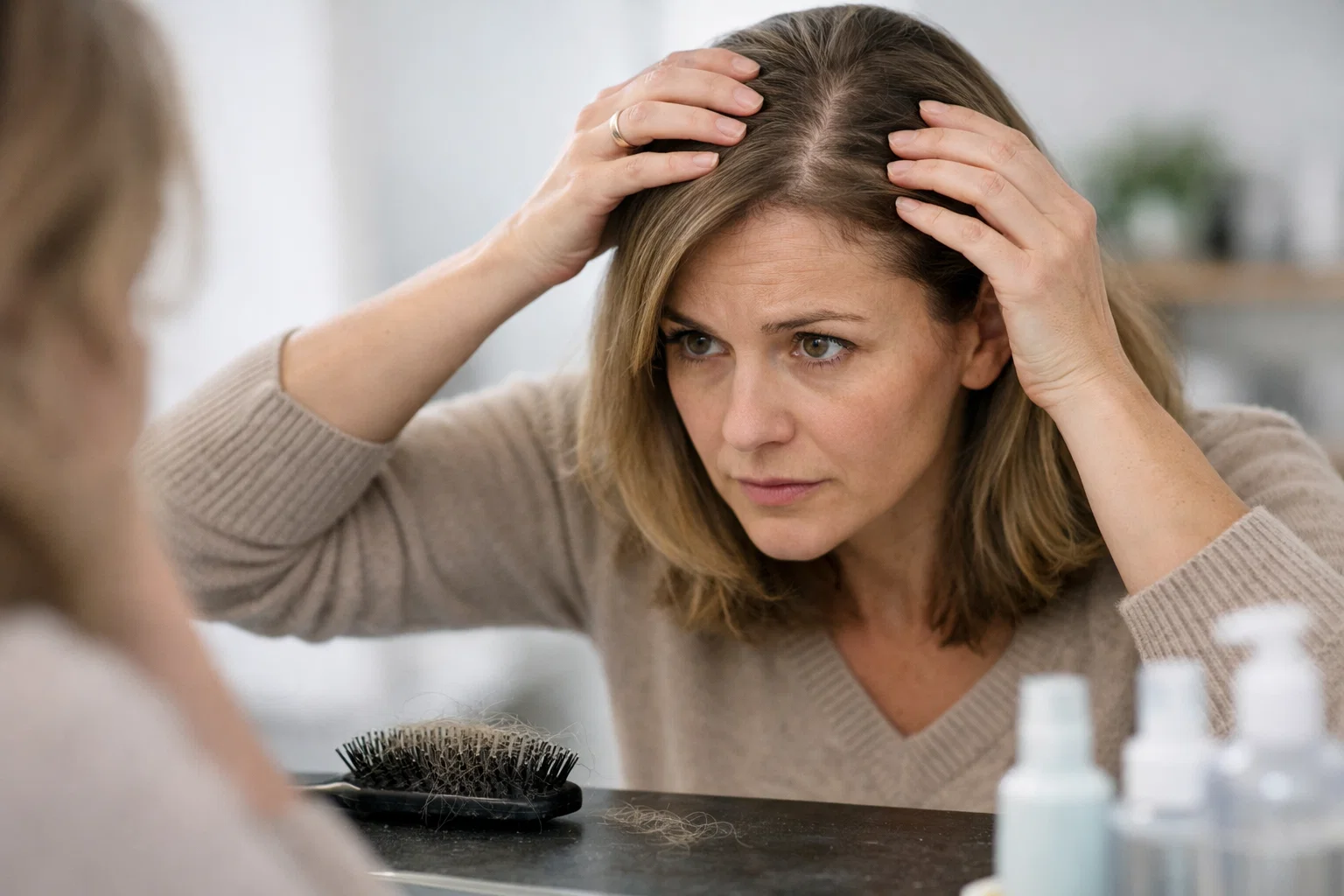
If you’ve noticed clumps of hair in your brush or shower drain a few months after giving birth, don’t panic. Postpartum hair loss is a normal, temporary process caused by shifting hormones. While it can be stressful, it is not permanent.
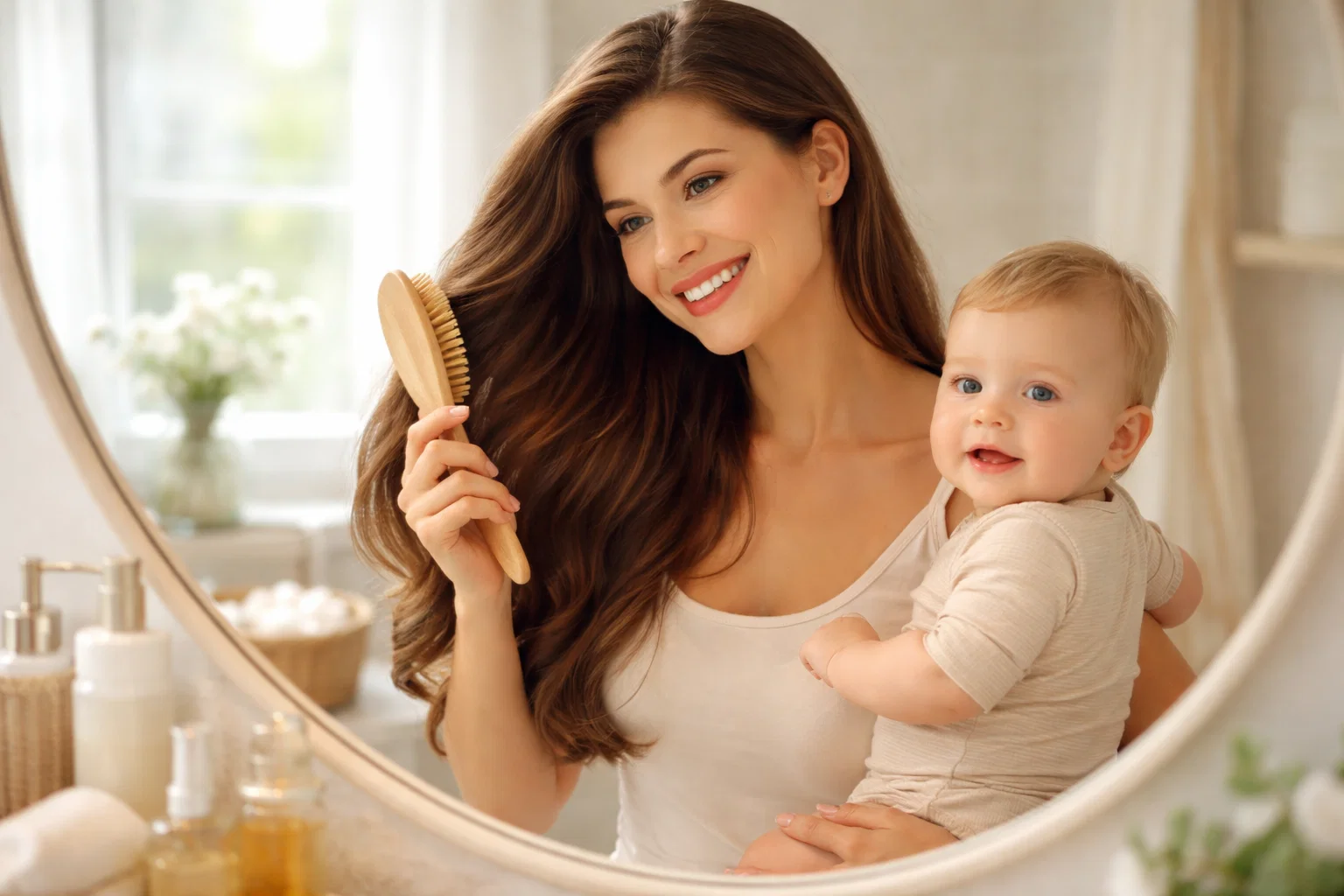
What is the Timeline?
Knowing when to expect changes can help ease the anxiety of postpartum shedding.
Starts: 3 Months
The shedding typically begins around the third month after delivery.
Peaks: 4-6 Months
This is when you might notice the most significant hair loss.
Ends: 12 Months
Most women return to their normal hair growth cycle by their baby’s first birthday.
5 Tips to Manage Hair Loss
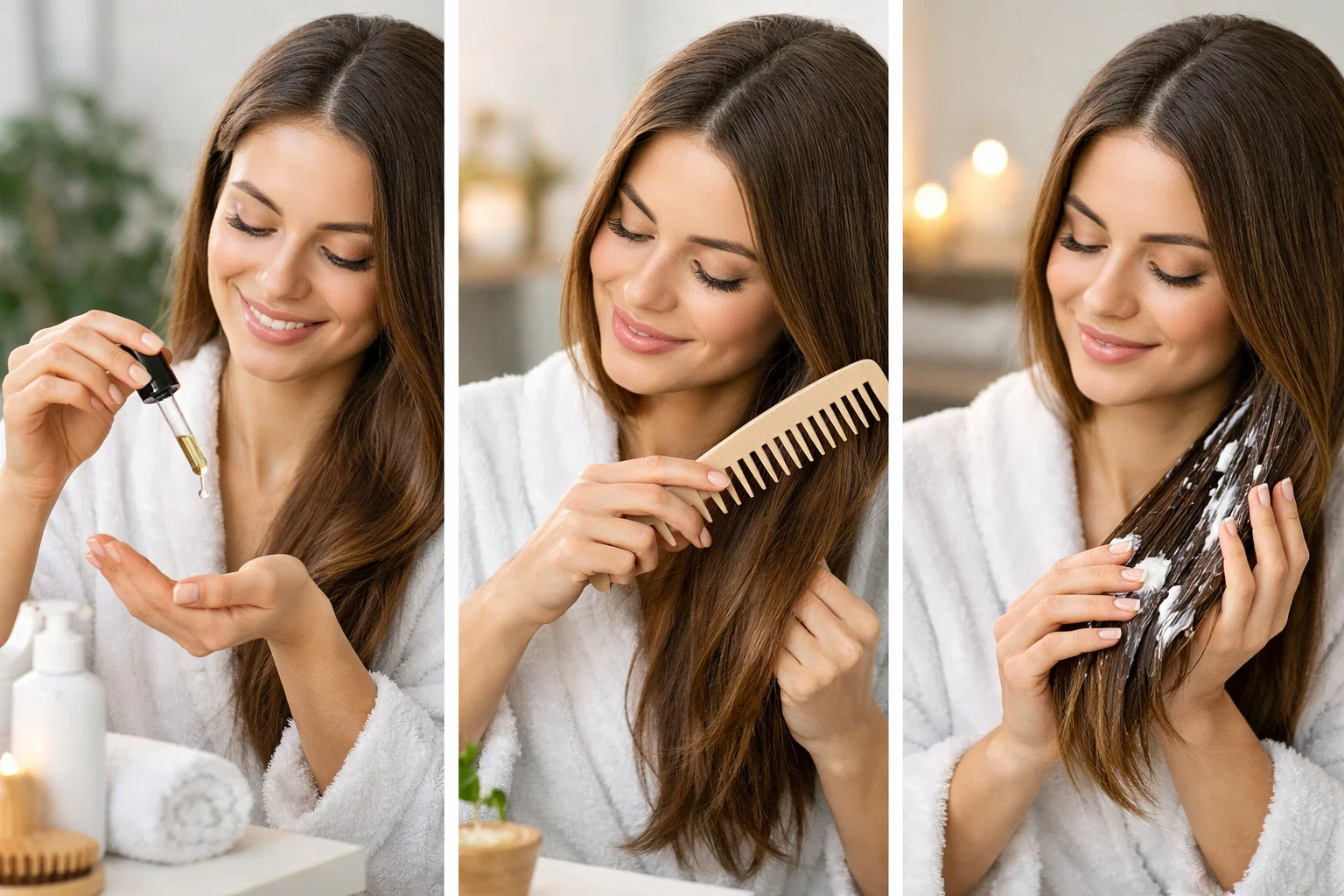
- Skip the Heat: Avoid blow dryers, curling irons, and straighteners. Your hair is more fragile now.
- Go Gentle: Use a wide-tooth comb to avoid pulling on hair.
- The „Mom Chop”: Many women choose shorter haircuts to add volume and hide thinning areas.
- Vitamins: Continue taking your prenatal vitamins or consult your doctor about biotin and zinc supplements.
- Avoid Tight Hairstyles: High ponytails or tight buns can lead to „traction alopecia,” worsening the situation.
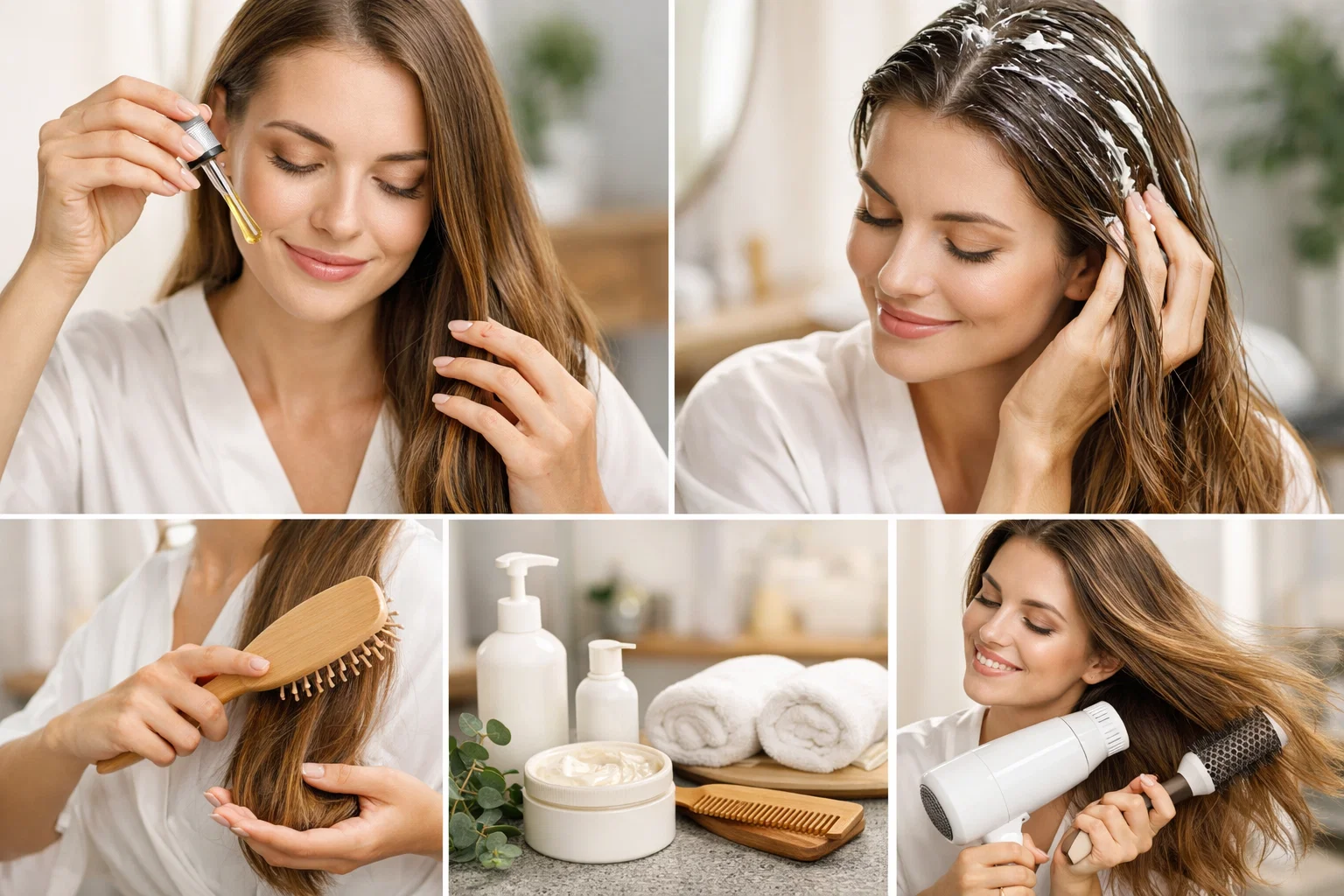
🥗 Regrowth Checklist: What to Eat
Your body prioritizes healing and breastfeeding over hair growth. To „re-activate” your follicles, ensure you are replenishing these vital nutrients:
Postpartum anemia is a huge hair-loss trigger.
Sources: Spinach, lentils, red meat.
Essential for collagen production and iron absorption.
Sources: Citrus, strawberries, peppers.
Supports keratin structure for stronger strands.
Sources: Eggs, sweet potatoes, nuts.
Accelerates hair tissue repair and follicle health.
Sources: Pumpkin seeds, chickpeas, beef.
Frequently Asked Questions
Medical Disclaimer: This article is for informational purposes only. Always consult your healthcare provider for medical concerns.