1. Genetics and Hormones
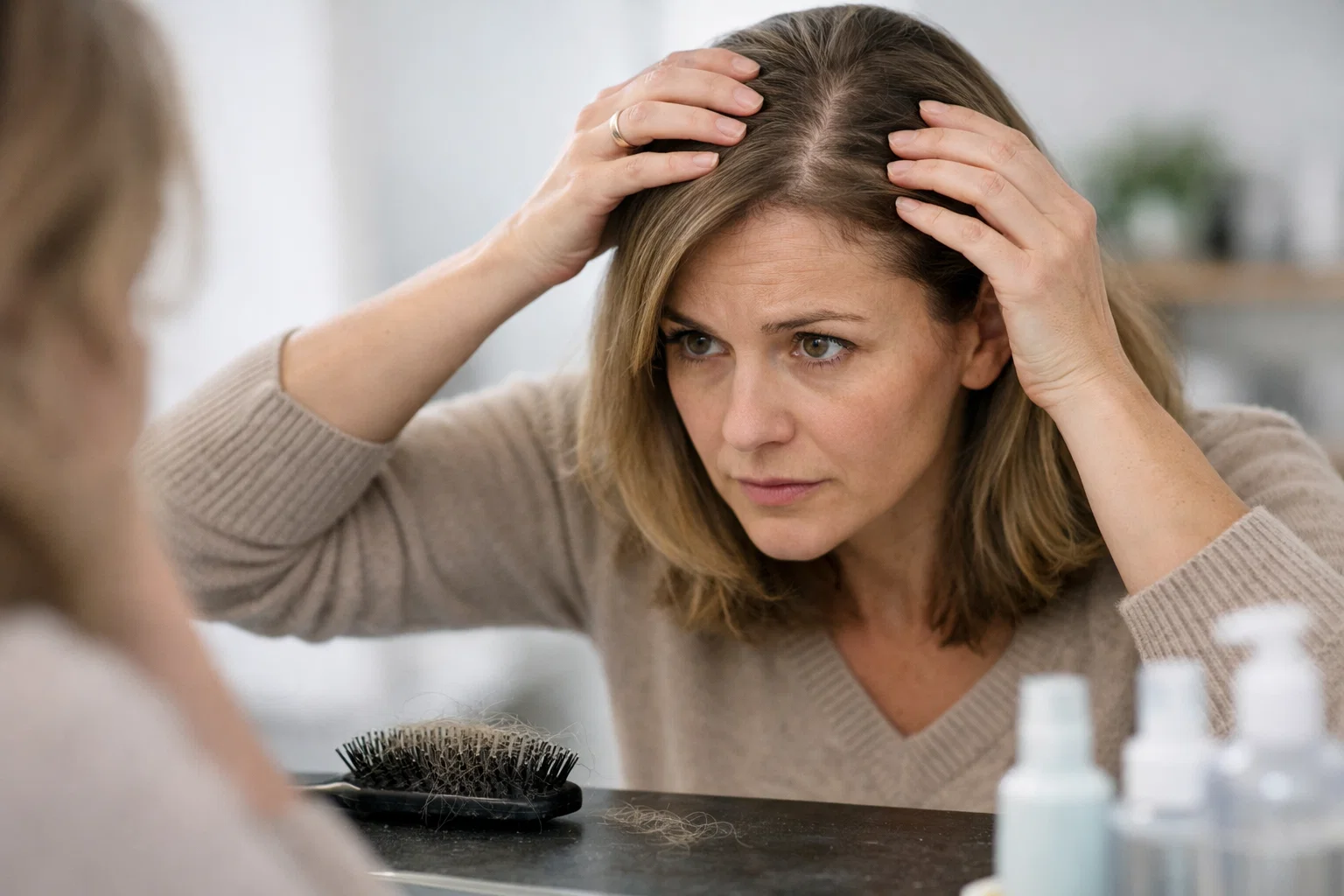
The most common cause of hair loss is a hereditary condition that happens with aging. This condition is called androgenetic alopecia, male-pattern baldness, or female-pattern baldness.
Heredity
Genetic factors determine the sensitivity of your hair follicles to certain hormones, leading to thinning over time.
Hormonal Shifts
Pregnancy, childbirth, menopause, and thyroid problems can cause temporary or permanent hair loss.
Hair Loss Science & Solutions
From biological triggers to modern 2026 treatments.
1. The Hair Growth Cycle
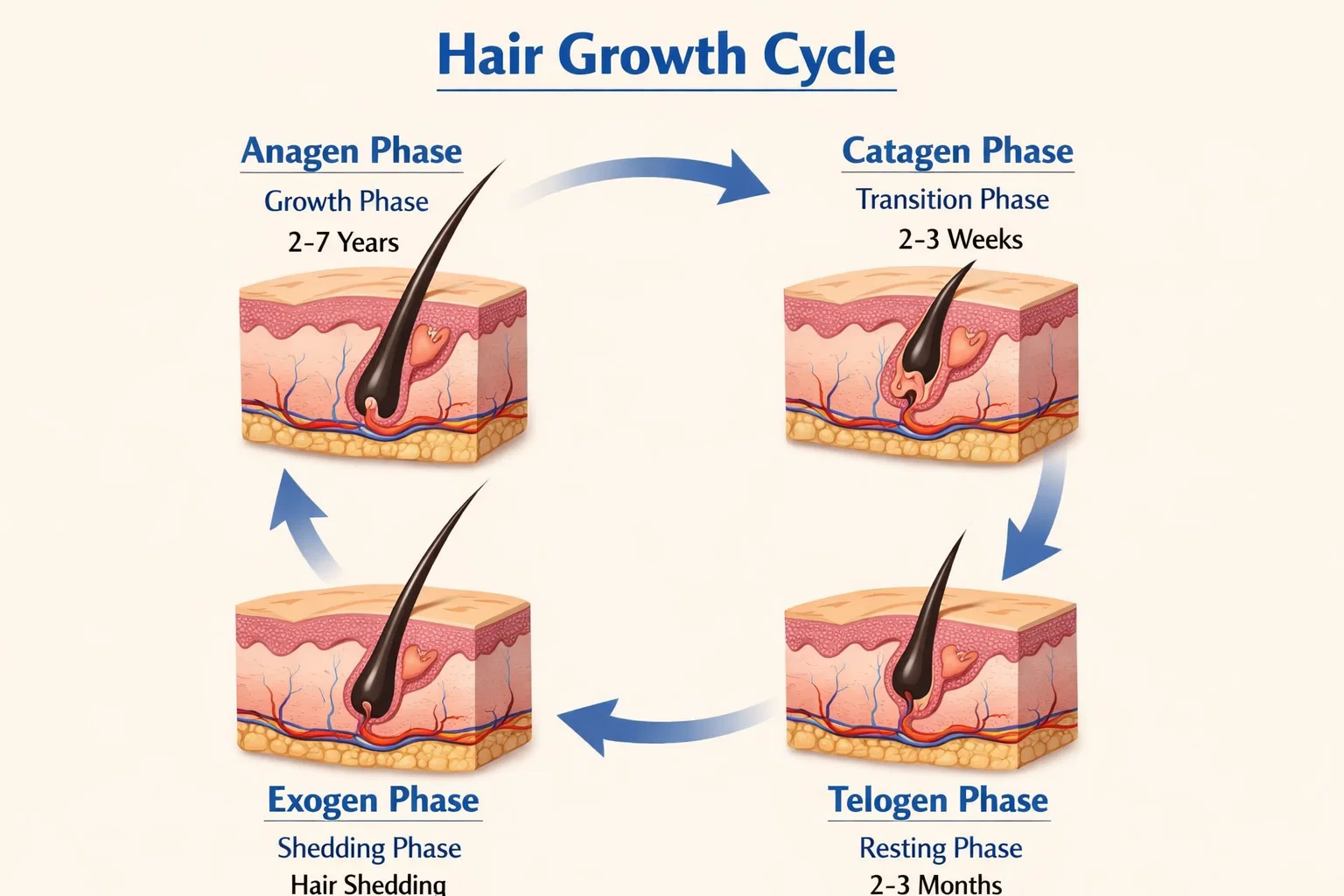
To understand hair loss, we must first look at the four distinct phases of a hair follicle’s life. Hair loss typically occurs when the balance between these phases is disrupted.
- Anagen (Growth): Lasts 2–7 years. About 90% of your hair is in this phase.
- Catagen (Transition): Lasts 2–3 weeks. The follicle shrinks.
- Telogen (Resting): Lasts about 3 months. Hair doesn’t grow but stays attached.
- Exogen (Shedding): The old hair falls out as new hair begins to grow.
2. Genetic & Hormonal Triggers
The primary cause of hair loss is Androgenetic Alopecia. In this condition, hair follicles are genetically sensitive to Dihydrotestosterone (DHT), which causes them to miniaturize over time.
Male Pattern Baldness
Typically starts with a receding hairline or thinning at the crown (the M-shape pattern).
Female Pattern Baldness
Usually presents as general thinning across the entire scalp, maintaining the hairline.
3. Modern 2026 Treatments
Advancements in 2026 have moved beyond simple topical creams. Current science focuses on regenerative medicine and precision targeting.
- Exosome Therapy: Using extracellular vesicles to signal hair follicles to return to the Anagen (growth) phase.
- Low-Level Laser Therapy (LLLT): Red light wavelengths that stimulate cellular activity in the scalp.
- JAK Inhibitors: New oral medications specifically designed for autoimmune-related hair loss like Alopecia Areata.