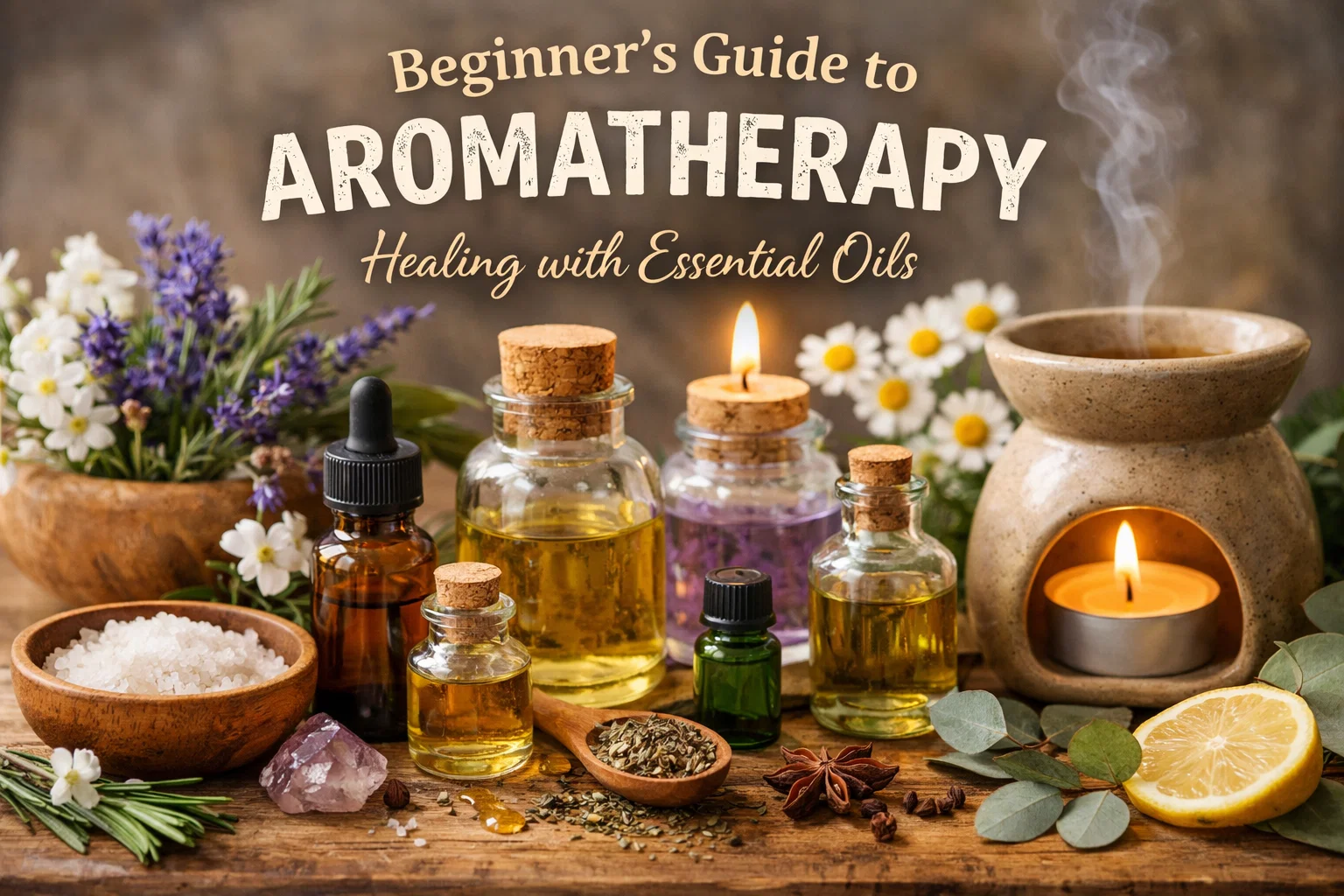
Beginner’s Guide to Aromatherapy
Healing with Essential Oils: A Journey Through Nature’s Scents.
Aromatherapy is a holistic healing treatment that uses natural plant extracts to promote health and well-being. By harnessing the aromatic power of essential oils, this ancient practice works to improve the health of the body, mind, and spirit.
The Science Behind the Scent
Essential oils aren’t just „nice smells.” They are highly concentrated plant compounds. When inhaled, the scent molecules travel through the olfactory system directly to the limbic system—the brain’s emotional center.
- Inhalation: Diffusers or steam inhalation affect mood and respiratory health.
- Topical Application: When diluted with a carrier oil, oils penetrate the skin to provide localized relief.
The Essential Starter Kit
If you are just beginning, start with these versatile and effective oils:
1. Lavender: The Swiss Army Knife of oils. Best for sleep, anxiety, and minor skin burns.
2. Peppermint: Great for boosting energy, relieving tension headaches, and aiding digestion.
3. Tea Tree: A powerful antiseptic. Ideal for acne and supporting the immune system.
4. Lemon: Uplifting and detoxifying. Use it to improve focus and clean the air.
Healing Benefits
| Stress Relief | Bergamot and Ylang-Ylang reduce cortisol levels. |
| Sleep Quality | Cedarwood and Lavender promote deep, restful sleep. |
| Pain Management | Eucalyptus and Rosemary help soothe sore muscles. |
Safety First
- Always Dilute: Never apply essential oils directly to the skin without a carrier oil (like Jojoba or Coconut oil).
- Patch Test: Test a small area of skin before full application.
- Do Not Ingest: Unless under the guidance of a clinical aromatherapist, oils should not be swallowed.
- Pets and Kids: Some oils (like Peppermint) can be toxic to cats/dogs or too strong for young children.
Frequently Asked Questions
Q: How many drops of oil should I use in a diffuser?
A: For a standard 100ml diffuser, 3-5 drops are usually sufficient.
A: For a standard 100ml diffuser, 3-5 drops are usually sufficient.
Q: Do essential oils expire?
A: Yes. Most oils last 1-3 years. Citrus oils oxidize faster, while heavier oils like Sandalwood can last longer.
A: Yes. Most oils last 1-3 years. Citrus oils oxidize faster, while heavier oils like Sandalwood can last longer.
⚠️ MEDICAL DISCLAIMER
The information in this guide reflects the personal views and research of the author. Essential oils are powerful compounds and should be used with care. This content is not intended to replace professional medical advice. Consult with a doctor before using aromatherapy if you are pregnant, nursing, or have a chronic health condition.
Rate this Guide
Average: 4.92/5 (1,405 reviews)