Why is Vitamin B12 Important for Your Health?
The Essential Guide to the „Energy Vitamin” and its Crucial Role in Human Survival.
Vitamin B12, also known as cobalamin, is a water-soluble vitamin that plays a monumental role in the functioning of the brain, nervous system, and the formation of red blood cells. Unlike many other vitamins, B12 has a complex absorption process and is primarily found in animal products, making it one of the most common nutritional deficiencies in the modern world.
The Core Biological Functions
1. DNA Synthesis & Cell Division
Every single cell in your body requires B12 to replicate. It acts as a cofactor for DNA synthesis, meaning without it, your body cannot produce healthy new cells at the required rate. This is most visible in tissues with high turnover, like your skin and blood.
2. Nerve Protection (The Myelin Sheath)
Think of your nerves like electrical wires. Vitamin B12 is responsible for maintaining the myelin sheath—the protective insulation around these wires. When B12 is low, this insulation degrades, leading to neurological „short circuits” felt as tingling or numbness.
3. Preventing Megaloblastic Anemia
B12 is essential for producing healthy, round red blood cells. Without it, the cells become abnormally large and oval-shaped, making them unable to leave the bone marrow properly. This leads to a state where your tissues are literally starving for oxygen.
Beyond the Body: Mental Health
Low levels of Vitamin B12 have been clinically linked to serious mental health challenges. It is involved in the synthesis of brain chemicals like serotonin and dopamine, which regulate mood.
- Depression & Anxiety: Low B12 leads to elevated levels of homocysteine, which can damage brain tissue and interfere with mood signaling.
- Memory Loss & Dementia: Chronic deficiency is often misdiagnosed as Alzheimer’s in the elderly because it causes severe „brain fog” and cognitive decline.
Red Flags: Symptoms of Deficiency
B12 deficiency can be subtle at first, but if left untreated, it can cause irreversible nerve damage. Look out for these signs:
- Tingling in hands/feet (Paresthesia)
- Balance problems & dizziness
- Muscle weakness
- Pale or jaundiced (yellowish) skin
- Swollen, smooth tongue (Glossitis)
- Extreme, unexplained fatigue
The High-Risk Groups
Certain groups must pay much closer attention to their B12 levels than others:
| Vegans & Vegetarians | B12 is naturally found almost exclusively in animal products. |
| Adults Over 50 | Stomach acid production decreases with age, reducing absorption. |
| Those on Metformin | Common diabetes medications can interfere with B12 uptake. |
| GI Disorders | Celiac or Crohn’s disease damages the ileum where B12 is absorbed. |
Best Dietary Sources
To keep your levels optimal, include these B12-rich foods:
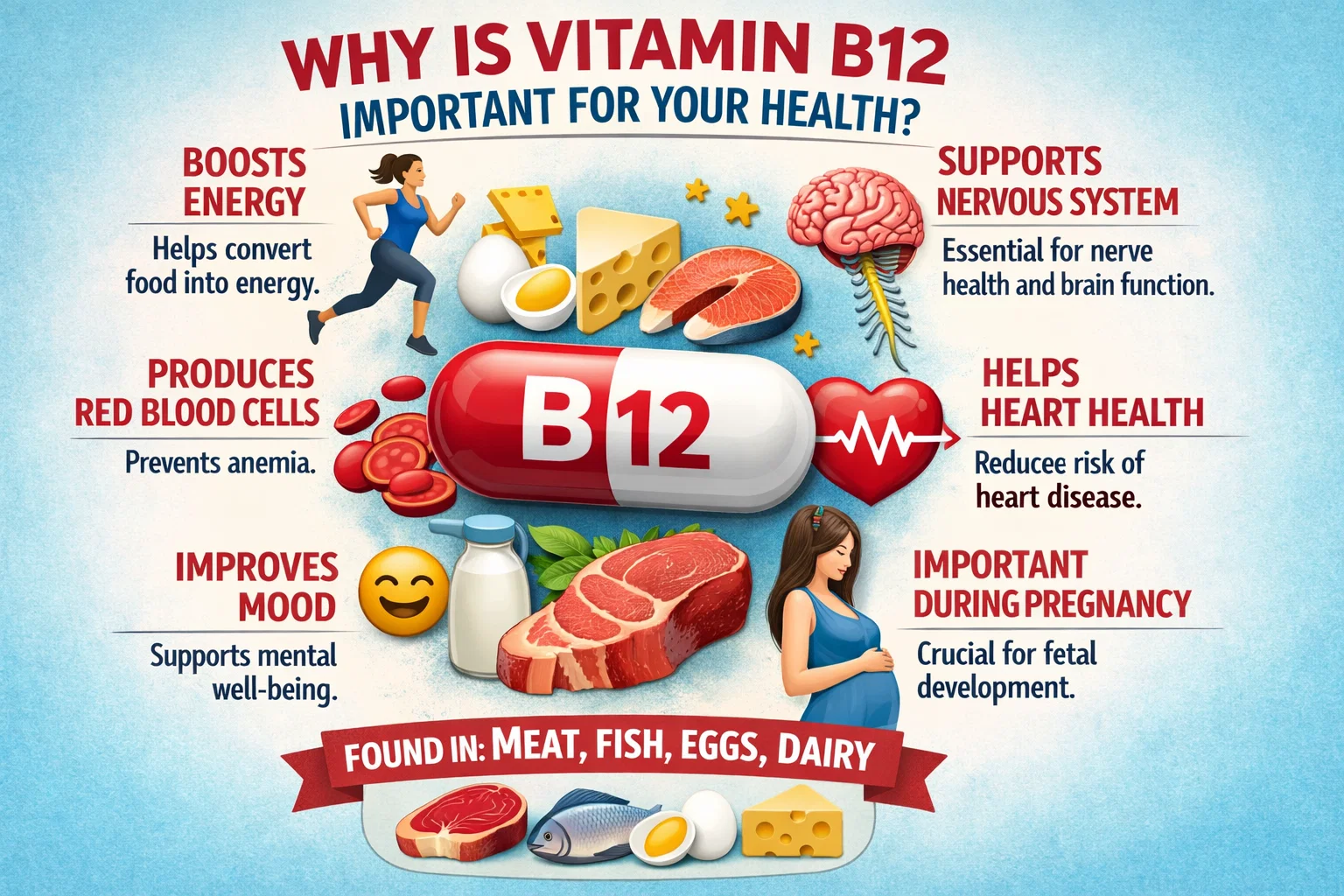
Beef liver, clams, salmon, fortified nutritional yeast, eggs, and dairy products.
Frequently Asked Questions
A: Because B12 is water-soluble, your body usually excretes any excess through urine. It has a very low toxicity profile.
A: It depends on the severity. While blood cell health can improve in weeks, neurological recovery can take months or even a year.
Was this B12 guide helpful?
Average: 4.97/5 (2,890 reviews)